

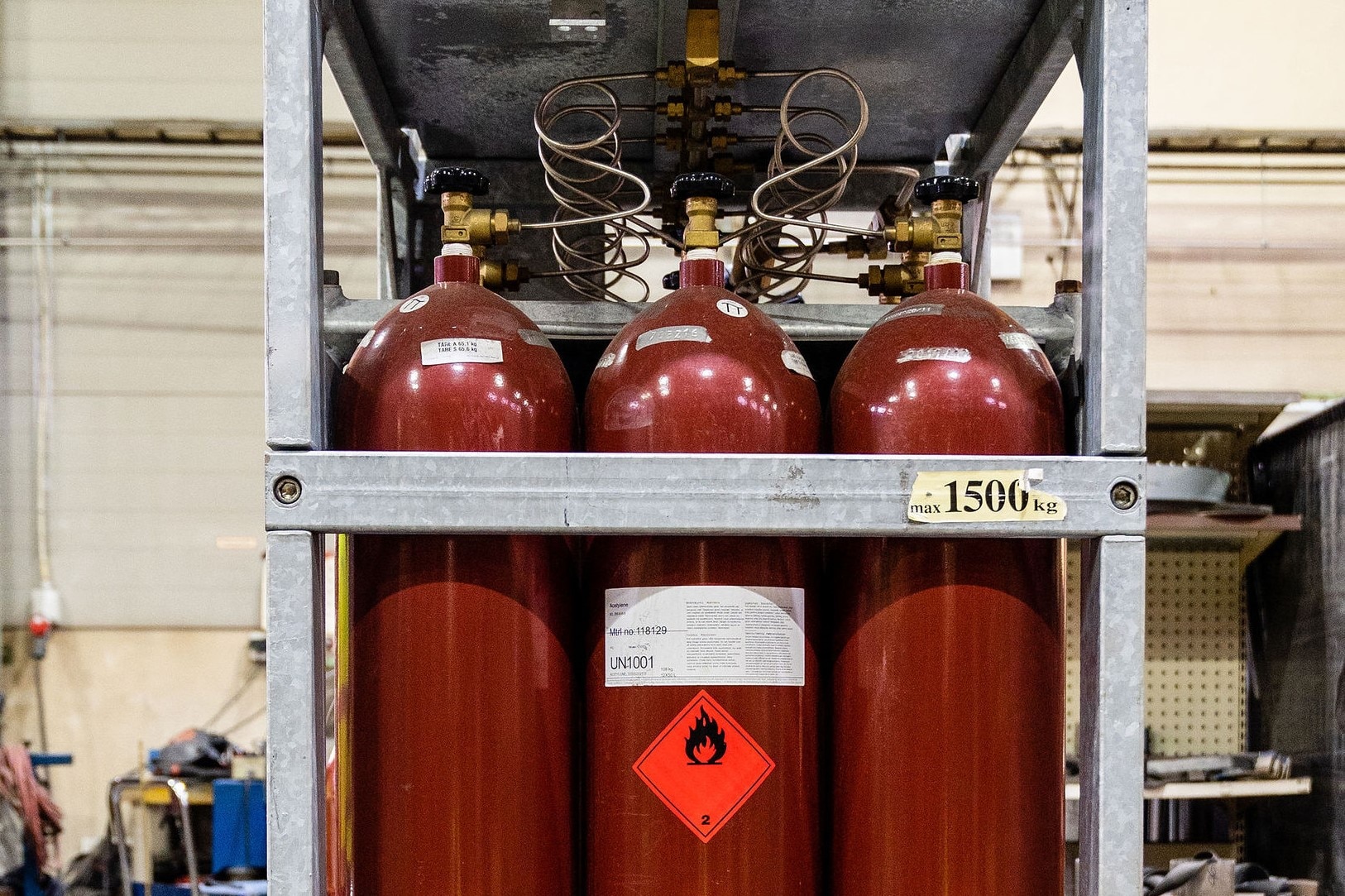
Safety instructions for acetylene
The benefits of acetylene for welding and cutting are well-known. Due to its excellent heat properties, it cuts much more efficiently than other gases, with productivity 33% better than propane gas.
Less well-known is the fact that acetylene, due to its high flammability, can pose a serious safety risk. Acetylene gas cylinders need to be handled, stored and transported correctly to be completely safe.
When handled and transported correctly, acetylene is a safe gas. Always follow the following safety instructions for acetylene:
-
Handling and Transport Instructions for Acetylene Cylinders
- ● Order the transport of the acetylene cylinder from the gas supplier directly to the point of use. If this is not possible, ensure that the vehicle you use has an open bed or efficient ventilation.
- ● Never transport an acetylene cylinder in a closed or unventilated space – even a small leak can lead to an explosive mixture.
- ● Remove all regulators and accessories before transport.
- ● Close the cylinder valves carefully before transport and make sure the valve protection cap is in place. Acetylene cylinders are never completely empty – acetylene can leak out even if there is no pressure.
- ● Transport cylinders in an upright position, secured and separated from the driver’s cabin.
- ● Remove cylinders from the vehicle immediately after transport.
- ● Never store acetylene cylinders in a vehicle without ventilation.
- ● If the cylinder has been in a horizontal position, keep it upright for at least 30 minutes before use.
- ● Do not smoke or use open flames near gas cylinders.
- ● Ensure that everyone handling gases is aware of the safety instructions.
-
Emergency Situations During Transport
- ● Close the valve if possible.
- ● Ventilate the area and remove ignition sources.
- ● Evacuate the area and contact emergency services.
- ● Always state that the cylinder contains acetylene.
If the cylinder suffers a mechanical impact (e.g., traffic accident), do not use the cylinder before inspection by the supplier.
If the cylinder leaks:
For more information, refer to the acetylene Safety Data Sheet.
 Download
| Safety Data Sheets | Product Data Sheets and Brochures |
|---|---|
|
|
 Do you want more information or ask
about safe handling of gases?
Do you want more information or ask
about safe handling of gases?